What just happened — and why it matters beyond South Africa’s borders
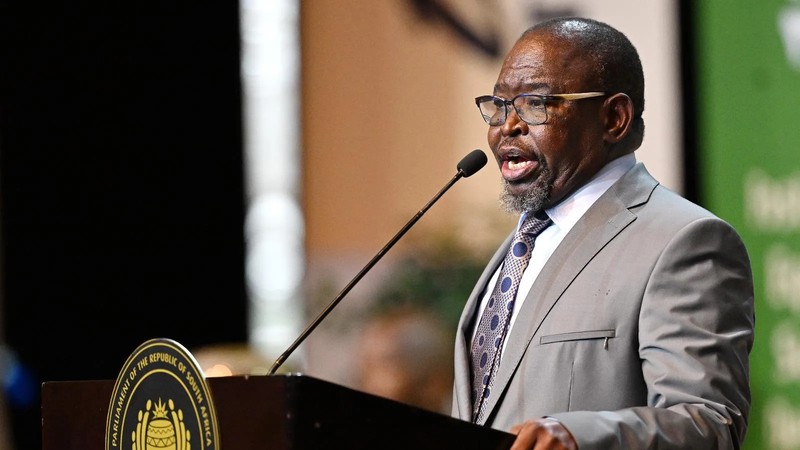
South Africa’s National Treasury just froze R13.5 billion in government transfers to 69 municipalities across all nine provinces. That’s not a bureaucratic footnote. That’s a government telling its own local authorities: you have been warned, you ignored us, and now we are cutting off the tap. The City of Johannesburg alone stands to lose R3.6 billion in withheld equitable share transfers for July 2026. This is what fiscal accountability looks like when a government stops blinking — and for every young Kenyan watching county governments burn through public money with zero consequence, this story hits differently.
What is an “equitable share” and why would withholding it hurt?
Every year, South Africa’s national government distributes a share of nationally collected revenue to local municipalities to fund basic services — water, electricity, roads, sanitation. This is their equitable share, and for many municipalities it is the financial backbone of day-to-day operations. The total equitable share for the new financial year is R110 billion, meaning the withheld R13.5 billion represents a significant but not catastrophic fraction of the whole. The mechanism is powerful precisely because municipalities depend on this transfer to pay salaries, service debts, and keep the lights on. Withhold it, and you create immediate, unavoidable pressure to comply.
Who got frozen out?
The list of affected municipalities reads like a roll call of South Africa’s most financially troubled local governments. From Gauteng, the City of Johannesburg and Emfuleni feature prominently. The Eastern Cape’s Nelson Mandela Bay and Buffalo City are on the list. The Free State contributes the largest cluster, with twelve municipalities including Mangaung and the notoriously distressed Maluti-a-Phofung. KwaZulu-Natal, Limpopo, Mpumalanga, the Northern Cape, and the North West all have municipalities on the list. This is not a regional problem. This is a national crisis of local governance that Treasury has finally decided to confront head-on.
What did these municipalities actually do wrong?
The core charge is persistent non-compliance with the Municipal Finance Management Act (MFMA) — South Africa’s legal framework governing how local government handles public money. Treasury didn’t pull this trigger lightly. These municipalities had been given written notices, multiple rounds of support, and formal opportunities to explain themselves. They failed anyway. The specific failures are damning and familiar to anyone who has watched Kenyan county governments operate: municipalities failed to adopt funded budgets, refused to investigate unauthorised, irregular, fruitless and wasteful expenditure (UIFWE), neglected to settle statutory obligations like pension fund contributions and tax deductions, and — critically — failed to hold anyone accountable when financial misconduct occurred.
The debt numbers are staggering
Emfuleni owes Eskom R8.05 billion for bulk electricity. Johannesburg’s historical electricity debt sits at R5.2 billion. Municipal consumer debt across South Africa had exceeded R480 billion as at March 2026, with both government entities and ordinary citizens among the biggest defaulters. These are not abstract accounting figures — they represent a cascading failure where municipalities cannot pay Eskom, Eskom struggles to maintain supply, and ordinary residents suffer rolling blackouts and service collapse. The political and administrative leadership of these municipalities has, in Treasury’s own words, committed a dereliction of fiduciary duties.
What must municipalities do to get their money back?
Treasury has set out clear, non-negotiable conditions for releasing the withheld funds. These are not vague promises — they are measurable, documented tests that municipalities must pass.
Is Treasury being too harsh — or not harsh enough?
The South African Local Government Association (SALGA) raised legitimate concerns. Some municipalities were penalised partly for failing to remit pension fund contributions and tax deductions — money already withheld from employees’ salaries that was then misappropriated for other municipal expenses. SALGA’s point is sharp: enforcement alone cannot fix structural dysfunction. Municipal consumer debt at R480 billion reflects a broken revenue ecosystem, not just bad management. Rural and economically vulnerable municipalities face unfunded mandates, infrastructure backlogs, and revenue constraints that no disciplinary board can solve overnight.
But here is the harder truth that Treasury is betting on: when there are no consequences, there is no incentive to change. Treasury originally targeted 99 municipalities. After direct engagements, that number dropped to 69 — meaning 30 municipalities course-corrected fast enough to avoid the freeze when they realised the threat was real. That is not a small detail. That is proof that accountability pressure works, at least on the margins. The question is whether the remaining 69 will comply quickly enough to avoid genuine service delivery damage, or whether the standoff drags on long enough to hurt the very residents these municipalities are supposed to serve.
What does this mean for Kenya?
Kenya’s county governments receive equitable share transfers from the national government through a constitutionally mandated framework that mirrors South Africa’s model almost exactly. County debts to Kenya Power, water utilities, pension funds, and the Kenya Revenue Authority have been growing for years. Audit reports flag billions in irregular and wasteful expenditure at the county level, year after year, with near-zero consequence management. The officials responsible for financial misconduct are rarely disciplined, rarely prosecuted, and often re-elected or reappointed. South Africa’s Treasury just demonstrated that the constitutional tools to enforce discipline exist — and that using them, even imperfectly, produces faster compliance than endless engagements and polite warnings ever will. The question for Kenya is not whether the legal framework exists. It does. The question is whether anyone in Nairobi has the political will to use it.