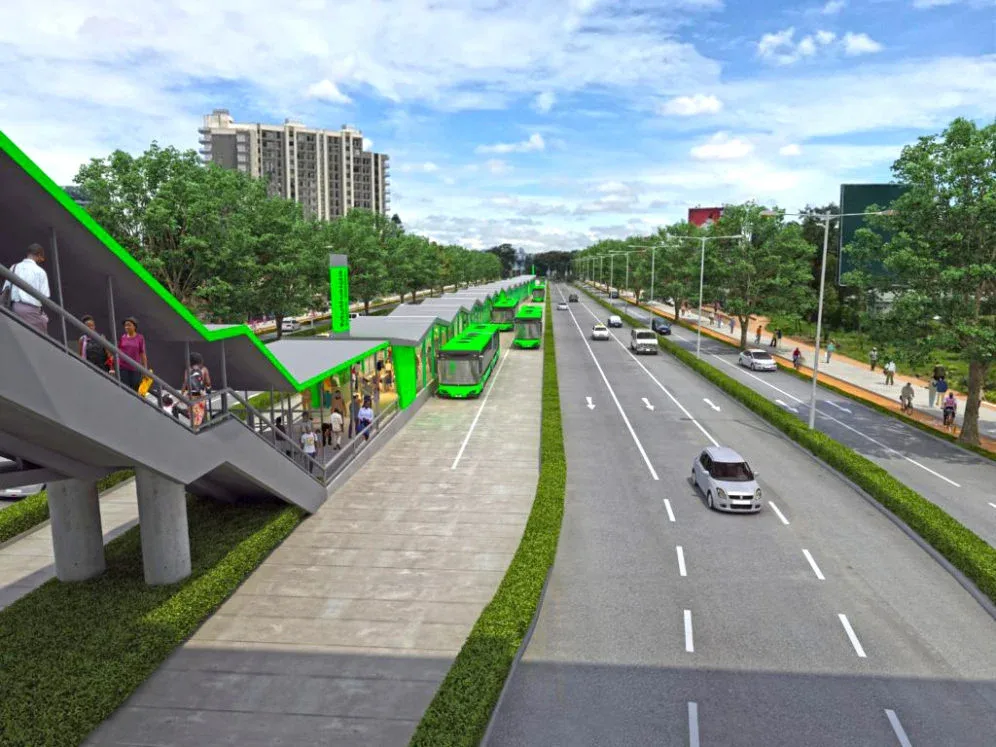
Nairobi’s public transport dream is rotting on the side of Thika Road — and it’s costing you money every single day.
The Nairobi Metropolitan Area Transport Authority (NaMATA) has racked up more than Sh1 billion in interest charges from delayed payments tied to the construction of Bus Rapid Transit (BRT) facilities along the Thika Road Superhighway, according to a damning Auditor-General’s report. As of June 30, 2025, NaMATA’s trade and other payables stood at Sh2.5 billion, with Sh1.038 billion of that figure representing interest alone — money owed not for any actual work done, but purely because the government couldn’t pay its bills on time.
The Auditor-General was blunt: the interest charges mean there is no value for money in the BRT project. That is not a technicality. That is an indictment.
A Project Frozen in Time
The numbers behind this failure are staggering. Contingent liabilities from cost claims stand at Sh745.1 million. Delays and the suspension of works have triggered a cost overrun of Sh1.78 billion — equivalent to 32 percent of the original contract price. The works-in-progress balance sits at Sh3.11 billion, a figure that has not moved from previous financial years. The project is, in every practical sense, stalled.
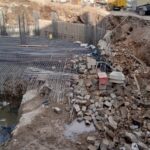
The construction contract — awarded to a firm operating in joint venture with another at a sum of Sh5,575,071,798 — collapsed after payments to the joint venture were repeatedly delayed. On January 11, 2022, the contractor suspended all works. More than three years later, the site remains frozen, the debt keeps growing, and Nairobi commuters keep squeezing into matatus.
The Vision That Was Sold to You
NaMATA had a plan, and on paper it looked serious. Following a corridor harmonisation study in 2014, the Ministry of Transport identified five BRT corridors across the city — named NDOVU (Line 1), SIMBA (Line 2), CHUI (Line 3), KIFARU (Line 4) and NYATI (Line 5) — designed to cover key transit routes and link up with existing and proposed commuter rail lines. These corridors were gazetted by the Nairobi Metropolitan Area Council in 2019 and positioned as the foundation for long-term sustainable mobility in the region.
NaMATA also outlined plans for seven commuter rail corridors connecting Nairobi to satellite towns — Limuru, Ruiru, Thika, Athi River, Konza, JKIA and Ngong. The authority described these as a “blueprint for long-term investments in sustainable mobility.” That blueprint now sits buried under a billion shillings of avoidable interest charges.
What This Means for Nairobi
This is not an abstract accounting failure. Every shilling wasted on penalty interest is a shilling that cannot build a bus lane, hire a transport planner or maintain a rail corridor. The BRT project on Thika Road was meant to move hundreds of thousands of Nairobi residents faster, cheaper and more reliably. Instead, it has become a monument to procurement dysfunction and fiscal negligence — and the bill lands squarely on the Kenyan taxpayer.
NaMATA has yet to publicly explain how it intends to settle the Sh2.5 billion in outstanding payables, restart the stalled works or prevent the interest burden from growing further. The Auditor-General’s report demands answers. So do the millions of Nairobians still waiting for a functional mass transit system.