The Money Is Real. The Pressure Is Realer.
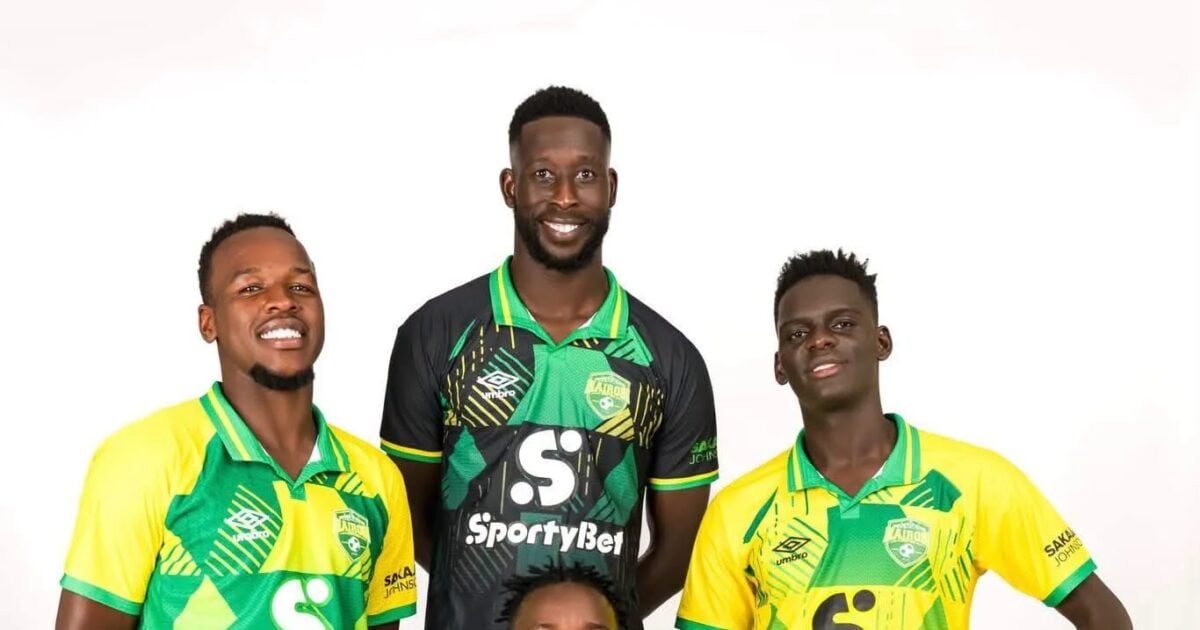
On a Wednesday morning in Nairobi, Nairobi United did something most Kenyan football clubs only dream about. They walked into a room, signed a Sh380 million deal with international betting firm SportyBet, and dared to say out loud what every fan in the capital has been thinking: we want the Champions League. Not the Confederation Cup. Not a top-half finish. The Champions League.
That is a bold declaration for a club that has not won a single match in five rounds of FKF Premier League action this season. Bold, or reckless, depending on how you read Kenyan football.
But here is the thing. Money changes conversations. And Sh380 million over three years, making SportyBet the club’s official shirt sponsor, is not pocket change in a league where most clubs operate on fumes and goodwill. This deal forces you to take Nairobi United seriously, even if the league table currently does not.
What the Club Is Actually Saying
Club CEO Nelson Odaya did not mince words at the unveiling ceremony. “This sponsorship is timely. It will steer our path to returning to the continental stage, this time playing in the big one, the Champions League.” That sentence carries weight because Nairobi United already knows what continental football feels like. They reached the group stage of the 2025/26 CAF Confederation Cup and lifted the FKF Cup in 2025, beating Gor Mahia in the final. These are not paper ambitions. There is a foundation here.
SportyBet Kenya Country Manager Dianne Maina framed the partnership around the club’s trajectory, specifically its climb from the National Super League to the top flight. “We settled on Nairobi United because of the club’s grit, discipline and willingness to grow,” she said. That is the language of a company that did its homework, not one that simply bought the biggest billboard available.
Maina also confirmed this is SportyBet’s first major club sponsorship in Kenya, though the firm has previously supported grassroots football. The company positioned the deal as part of its Corporate Social Responsibility strategy while also being transparent about the visibility it gains in the Kenyan market. That honesty is actually refreshing.
Sakaja Steps In, and the Stakes Go Political
Nairobi Governor Johnson Sakaja, who serves as the club’s patron, attended the ceremony and immediately raised the stakes higher. His message was direct: win the league. “Our aim is to win the league this season. It will be our greatest achievement since the inception of the club in 2018,” Sakaja said. He acknowledged the difficulty of attracting this level of investment and made clear that the burden of delivery now sits squarely with the players.
Sakaja’s involvement is not incidental. A governor publicly attached to a football club’s ambitions is a political calculation as much as it is a sporting one. Nairobi United represents the capital city, and a title-winning club under his patronage would be a story worth telling on any campaign trail. Young Nairobi voters who bleed football understand this dynamic better than most.
The Uncomfortable Truth About Five Winless Games
Let’s not sanitise this. Nairobi United have played five league matches and won none of them. They now face defending champions Gor Mahia on Sunday at Wang’uru Stadium in Kirinyaga. The timing of this sponsorship announcement, right before that fixture, reads like a motivational gamble.
Team captain Ovella Ochieng asked supporters for patience. “I know we have not started well this season, but I am calling for patience. The results will come.” That is the kind of statement that either ages well or becomes a punchline. Kenyan football fans, particularly the young, skeptical ones who have watched too many “project” clubs collapse under the weight of their own press releases, will want to see the results before they buy in fully.
There is, however, one statistic worth noting. The Naibois, as the club is known, have never lost to Gor Mahia. Two wins and a draw in three meetings. If that record holds on Sunday, the narrative around this sponsorship deal shifts immediately.
The Legends in the Room and What They Represent
The ceremony drew a remarkable gathering of Kenyan football history. Former Harambee Stars striker Dennis Oliech was there. So was former national team captain Musa Otieno, ex-Tusker player Edward Karanja and Sammy Shollei. Their presence was not decorative. It was a signal that the people who built Kenyan football’s legacy are watching this club and choosing to associate with its future.
That matters in a country where institutional memory in football is short and cynicism runs deep. When Oliech walks into your unveiling, you are borrowing credibility that money alone cannot buy.
What This Deal Means for Kenyan Football Broadly
Beyond Nairobi United, this sponsorship raises a question that every FKF Premier League club should be asking: why them and not us? SportyBet’s entry as a major club sponsor, at this scale, signals appetite from the betting industry to invest in Kenyan football in ways that go beyond stadium advertising boards and halftime odds displays.
If this partnership delivers results, on the pitch and in terms of brand visibility, it opens a door. Other betting firms, other corporates watching from the sidelines, will take note. Kenyan football has spent years arguing that it deserves serious investment. Nairobi United just made that argument with Sh380 million worth of evidence.
The pressure, now, is to prove the argument right.