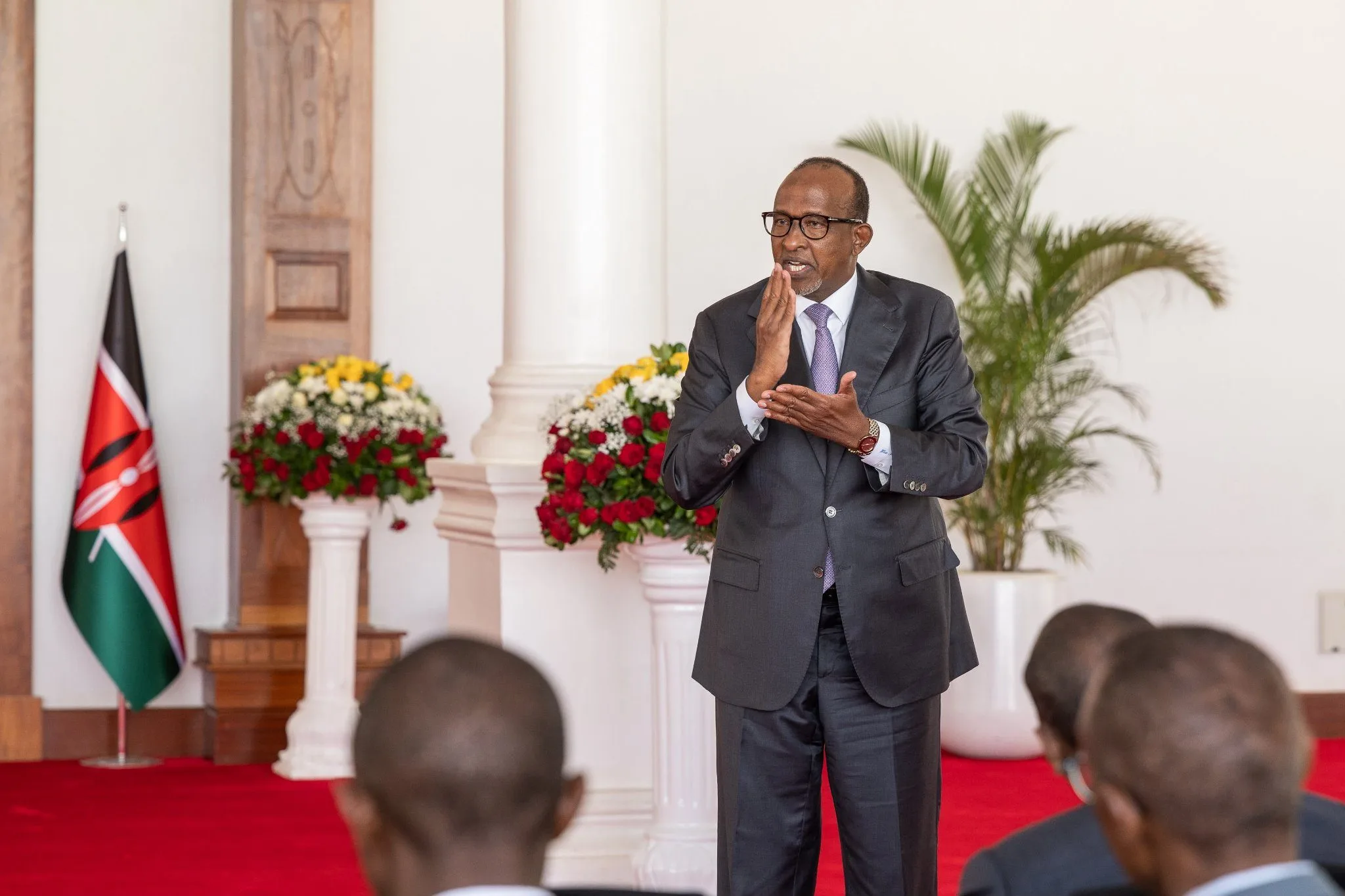
Health Cabinet Secretary Aden Duale is in damage control mode. After remarks he made at a community event in Lafey Constituency, Mandera County, ignited a national firestorm, the National Cohesion and Integration Commission (NCIC) has launched a formal investigation. Duale’s response? He says everyone got it wrong.
In a statement released Friday, Duale insisted he had been “widely misquoted” and that his comments were ripped from context to push what he called “false and misleading narratives.” The specific flashpoint is a Somali proverb — “Waraabe la-tagis bartay, ka-ridis waa ku dhib” — which he says is a figurative expression about the difficulty of abandoning long-held habits or advantages. Nothing more.
“It was never directed at any community or intended to demean anyone,” he said. He framed his speech as a message about inclusivity, about ensuring every Kenyan — regardless of region or ethnicity — gets a fair shot at serving the nation. Noble words. But many Kenyans aren’t convinced.
The controversy erupted after Duale, speaking in Somali at a community empowerment event, praised President William Ruto for restoring the dignity of the Somali community — then appeared to suggest that certain communities believed only they should prosper in Kenya. That landed hard. Most listeners understood it as a pointed jab at the Kikuyu community. Whether that reading is fair or not, the political damage was immediate.
Kirinyaga Governor Anne Waiguru didn’t wait. She called the remarks “deeply regrettable” and “dangerous,” and demanded an apology. This wasn’t an opposition politician grandstanding — Waiguru sits inside the Kenya Kwanza coalition. That stings differently.
The Senate took it up too. Senators Abdul Haji, Ledama Olekina, and Enoch Wambua stood up to defend constitutional values of national cohesion. East African Legislative Assembly MP Falhada Iman went further, stating plainly that no Kenyan community should be stereotyped or demeaned. The message was bipartisan: this crossed a line.
Duale fired back with a counter-accusation that many young Kenyans will find worth examining. He called out what he termed “selective outrage,” arguing that some of his loudest critics stayed silent when inflammatory remarks targeting the Somali community were made in the past. “Public leaders should reject selective outrage and apply the same standards consistently,” he said. It’s a legitimate challenge — and one that deserves an honest answer from those now leading the charge against him.
But here’s the thing: the NCIC isn’t adjudicating who has been most consistently outraged. It’s investigating whether Duale’s actual words violated the law. The Commission’s Investigations Department has confirmed a “thorough and impartial inquiry” is underway. If the allegations hold, his remarks could breach Article 33 of the Constitution and Sections 13 and 62 of the National Cohesion and Integration Act — provisions that exist precisely because Kenya has paid the price of unchecked ethnic rhetoric before.
The timing matters. Senators explicitly flagged the 2027 General Election as the backdrop to all of this. Kenya is already entering that dangerous pre-election season where identity politics gets weaponised and community grievances get exploited. Every leader who plays that game — consciously or not — adds fuel to a fire that has burned this country before.
Duale says his commitment is to national unity and peaceful coexistence. The NCIC will decide whether his words match that commitment. Until then, the rest of us should resist the urge to simply pick a side based on tribal loyalty — and ask instead what kind of political culture we actually want to build.