For years, the promise of Kenyan oil felt like a political carrot dangled in front of a hungry public, always just around the corner, always delayed, always hedged with caveats. Now, in the sun-scorched flatlands of South Lokichar, drilling rigs are turning and the clock is officially counting down to December 1, the date set for Kenya’s first commercial crude oil production. This is not a press release fantasy. This is real, and the stakes for ordinary Kenyans could not be higher.
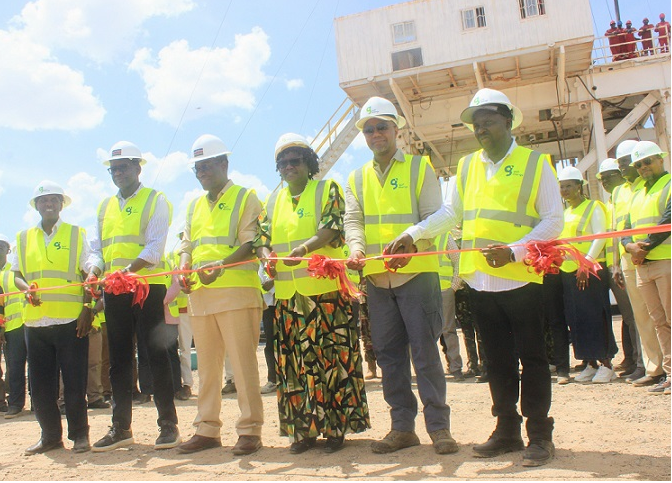
Gulf Energy E&P BV SEZ, the government’s contracted operator, has begun spudding operations at the Amosing 1 and 2 oil fields in Turkana County, marking the formal launch of a Ksh 774 billion ($6 billion) drilling and crude oil production programme. Energy and Petroleum Development Cabinet Secretary Opiyo Wandayi presided over the event, calling it a historical milestone and praising the contractor’s professionalism. Whether you trust Wandayi’s optimism or not, the machinery is in the ground and the GW70 onshore drilling rig, leased from Great Wall Drilling Company, is already at work.
The fields in question sit within Blocks T6 and T7, and Gulf Energy’s focus centres on four specific discoveries: Ngamia, Amosing, Twiga and Ekales, collectively branded as the NEAT fields. Together, these are projected to produce more than 20,000 barrels per day in the first phase, with a second phase targeting 50,000 barrels per day. Over a 25-year contract period, the six discoveries carry a best-estimate recovery of 326 million stock-tank barrels. Kenya projects potential lifetime earnings of more than Ksh 371 billion ($2.9 billion), depending on global oil prices and actual production volumes.
The crude itself is described as an intermediate, paraffinic, sweet oil with an API gravity of 30.5 degrees, indexed to Dated Brent. That classification matters because it signals a product the global market will buy. From December 1, the first phase production will be trucked by road all the way to Mombasa for stockpiling at Kenya Petroleum Refineries Limited tank farms. That is a logistical undertaking on its own, and it tells you something about the infrastructure gaps that still exist between Turkana and the coast.
Roads and Transport CS Davis Chirchir acknowledged that gap directly, announcing a government commitment of at least Ksh 24 billion in infrastructure investment in the oil fields region, covering roads and related development in Turkana County. His framing was about elevating the region’s socioeconomic standing, which is a phrase that should make any Turkana resident pause and demand specifics. The county has long been one of Kenya’s most marginalised, and the history of resource extraction across Africa offers little automatic comfort that proximity to oil translates into prosperity for local communities.
Gulf Energy MD Paul Limoh struck a confident tone, pledging to deliver against the Field Development Plan to world-class standards and insisting that project management timelines are being held tightly. The operation runs under Production Sharing Contracts with the national government, overseen by the State Department of Petroleum and the Energy and Petroleum Regulatory Authority. That oversight structure will matter enormously when the revenue starts flowing and the question of who gets what becomes politically charged.
Here is the truth that no official statement will hand you: Kenya has been here before in spirit, with big announcements and bigger promises about oil wealth transforming the north. The difference today is that a rig is actually drilling. December 1 is a real date, not a vague horizon. And 326 million barrels over 25 years is a figure that, if honestly managed, could reshape public finances in ways that touch education, healthcare and infrastructure for millions of Kenyans who have never set foot in Turkana. The question is not whether the oil is there. The question is whether the institutions managing it are ready to be held accountable by a generation that has seen enough looting to know exactly what is at risk.