The State Released Dangerous Offenders. Now It Can’t Find Them.
South Africa’s Department of Correctional Services (DCS) has admitted to Parliament that 29,320 parolees and probationers have absconded — and remain untraced. Among them: convicted murderers, rapists, and armed robbers. This isn’t a bureaucratic footnote. This is a public safety emergency hiding in plain sight.
The Numbers They Don’t Want You to Sit With
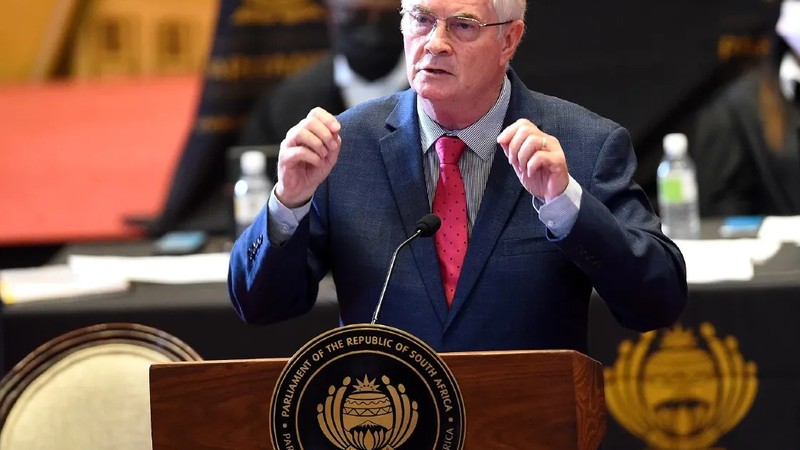
DCS Chief Deputy Commissioner for Community Corrections, Gustav Wilson, told MPs that the department is currently supervising 82,093 offenders in the community. Of those, more than a third — 29,320 — have simply vanished.
But it gets worse. Investigative outlet amaBhungane reported that nearly 28,000 of these absconders are classified as “high-risk” — and more than half of the untraceable cases involve parolees released between 1991 and 2004. The state has failed to find these people for over two decades.
These cases were quietly shelved under a category called “archived absconders” — 15,860 individuals the government essentially gave up on tracing. The DCS now claims it no longer uses this category. That denial should raise more questions than it answers.
The Government’s Response: Trust Us
DCS Minister Pieter Groenewald’s spokesperson, Singabakho Nxumalo, called the amaBhungane findings “incorrect,” insisting the department has 1,764 officials dedicated to community corrections supervision and “active tracking and tracing capabilities in all regions.”
The department also pointed to specialised tracking teams established in 2021, improved cooperation with the South African Police Service, and data-sharing with the Department of Home Affairs. Since 2021, they say, more than 6,000 absconders have been traced.
Six thousand traced. Over twenty thousand still missing. You do the math.
Where Are They? The Provincial Breakdown
The absconders are not evenly spread. Gauteng leads with 9,355 untraced parolees, followed by KwaZulu-Natal at 7,073 and the Western Cape at 6,429. These are the country’s most populated — and in many areas, most violent — provinces.
If you live in Johannesburg, Durban, or Cape Town, this is not an abstract policy failure. These are your streets.
A System Already Buckling Under Its Own Weight
The DCS didn’t hide the structural rot entirely. The department acknowledged budget cuts, staff shortages, security risks in high-crime communities, and ballooning caseloads as ongoing operational challenges.
Meanwhile, South Africa’s prisons hold 168,795 inmates — against approved bed space for only 107,067. That’s an overcrowding rate of approximately 58%. The system is not just failing to track people after release — it’s struggling to hold them before it.
The DA Wants Answers. So Should You.
The Democratic Alliance (DA) has formally called on Parliament to summon Minister Groenewald, National Commissioner Makgothi Samuel Thobakgale, and senior officials to account for the disappearances.
“This is a public safety crisis. When murderers and rapists disappear from the parole system, the state places communities at risk and destroys public confidence in the criminal justice system,” said DA spokesperson Janho Engelbrecht.
The DA has also proposed GPS-enabled electronic monitoring for all parolees convicted of violent crimes — a modern Community Corrections and Electronic Monitoring System that would make it structurally harder for dangerous offenders to vanish.
The Bottom Line
The state released thousands of violent offenders into communities under a supervision system that, by its own admission, cannot locate them. Officials are now pointing to new task teams, better databases, and inter-departmental cooperation as proof of progress.
But the question isn’t whether the DCS has a plan. The question is: why did it take a media investigation and a parliamentary briefing for the public to find out that 29,000 parolees were unaccounted for?
Transparency wasn’t offered. It was extracted. And that should tell you everything about who this system was designed to protect.