A town that used to roar
There was a time when Mumias meant something. The machines hummed, the money flowed, and parents paid school fees off the back of sugarcane. That town is gone now — hollowed out by what Nairobi Senator Edwin Sifuna calls a deliberate heist, engineered by powerful men with government connections and zero accountability to the farmers who built the place.
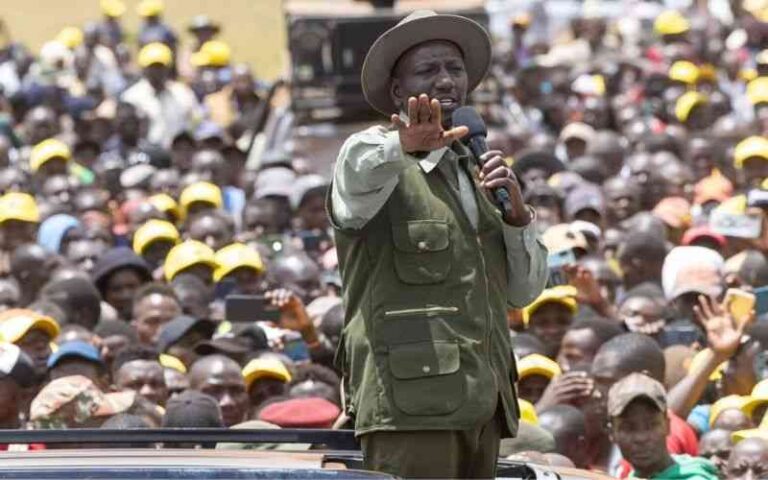
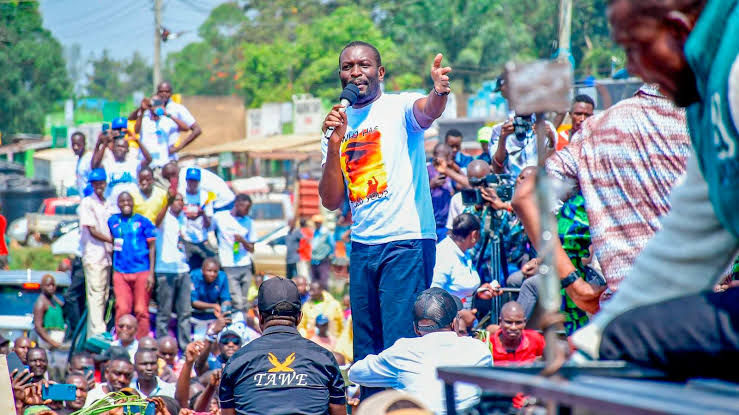
On Sunday, Sifuna stood in Mumias Town and said it plainly: if he becomes Kenya’s sixth president in 2027, Mumias Sugar Factory goes back to the public. Full stop. No hedging, no task forces, no “stakeholder consultations.” Thirty days. Done.
It was the final day of the Linda Mwananchi brigade’s three-day tour of the Western region — a political convoy that began as an economic pitch and ended as something closer to a revival meeting, complete with Sunday mass at Mumias ACK Church before the rallies kicked off across Mumias East, Shianda Market, Navakholo, Malava and Lumakanda.
The accusation on the table
Sifuna did not mince words about who he holds responsible for the collapse of Western Kenya’s sugar economy. He named President William Ruto directly, accusing him of colluding with private millers to capture State-owned factories while simultaneously issuing importation licenses to cronies — flooding the market with cheap foreign sugar while local farmers rot in debt.
“Because of greed and issuing importation licenses to cronies, the companies collapsed,” Sifuna told the crowd. “When we take over leadership, the first thing we will do is to get rid of these unscrupulous businessmen stifling the economy of Western region.”
Vihiga Senator Godfrey Osotsi sharpened the accusation further. He called out the conflict of interest at the heart of the privatisation narrative — a president, he argued, who uses proxies to own the very factories he was supposed to protect. “Ruto took over Mumias through other private investors in the name of privatisation,” Osotsi said. He then turned directly to Sifuna with a demand: return Mumias Sugar to the people within thirty days of taking office.
The man asking you to trust him anyway
Sifuna knows the obvious objection. He has never run a county, never managed a ministry, never governed anything larger than a senatorial office. He addressed it head-on, asking the crowd not to measure him by conventional political CVs but by something harder to quantify — intention and hunger.
“I now have a dream and I have told my brothers about it,” he said. “Some have believed in me, others have doubts, but through your prayers I shall achieve it.” It was an appeal to faith over record, and in a region that has watched credentialled politicians strip it bare for decades, that framing lands differently than it might elsewhere.
He also took a pointed, if respectful, swipe at Kisumu Governor Prof Anyang’ Nyong’o, who is part of a team of elder statesmen tasked by President Ruto to draft Kenya’s next long-term development blueprint — the successor to Vision 2030. Sifuna’s argument was generational. “A chicken and its chicks cannot sit down and draft a plan on how to survive until 2060 and give the implementation to an eagle,” he said, urging the old guard to let the next generation steer.
The coalition taking shape — and the tension inside it
Trans Nzoia Governor George Natembeya was blunt about the electoral arithmetic. He mapped out a scenario where Rigathi Gachagua locks down Mount Kenya, Kalonzo Musyoka holds the Kamba vote, James Orengo and Babu Owino seal Nyanza, and Linda Mwananchi closes Western entirely — leaving Ruto with no viable path to a second term. “There is no formula Ruto will use for reelection,” Natembeya said flatly.
But the coalition’s internal tensions were impossible to ignore. Democracy for Citizens Party Deputy Leader Cleophas Malala — who supports Sifuna personally but remains in a different party — and Kakamega Senator Boni Khalwale spent two days visibly competing for the same voters, each trying to nudge the other off the Kakamega gubernatorial race. Neither blinked.
Malala defended his unusual position — backing Sifuna while sitting with figures like Rigathi Gachagua on other occasions — as a deliberate vote-harvesting strategy. “If you see me sitting with Riggy G, I am not stupid, I am wooing voters for my brother on the other side,” he said. Whether that explanation satisfies skeptical voters in Kakamega remains to be seen.
The money, the message, and what comes next
Former Bungoma Governor Wycliffe Wangamati offered the historical argument: Nigeria, Liberia, Senegal and Botswana have all produced one-term presidents. It is not a fantasy. It is a precedent. And it is the bet Linda Mwananchi is asking Western Kenya to make.
The brigade closed the tour announcing they have raised Sh12 million from the public through a paybill — a figure they framed as proof that ordinary Kenyans, not political godfathers, are funding this movement. Whether that grassroots money translates into grassroots votes by 2027 is the only question that matters now.
Mumias used to roar. Sifuna is promising it will again. The people of Western Kenya have heard promises before — and they know exactly what it costs when those promises turn out to be noise.