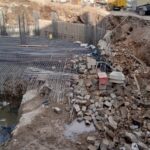
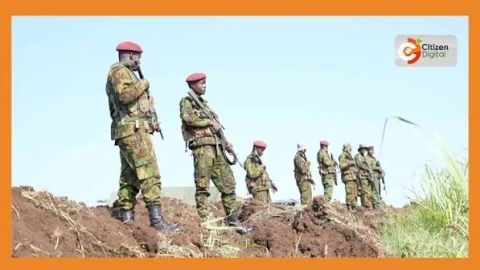
A 19-year-old student now lies in a hospital bed with a bullet in his leg. One person is dead. Six police officers are injured. And somewhere in the hills of Transmara, the Kilima Pesa gold mining site sits silent — not because the government made a compelling case for why it should be, but because armed officers showed up and people died. This is what happens when the state decides that a directive matters more than the livelihoods of the people it is supposed to serve.
The thesis here is uncomfortable but unavoidable: the Lolgorian confrontation was not a breakdown of order — it was a predictable consequence of an order that never bothered to consult the people it would most affect. When police moved to arrest miners at Kilima Pesa for defying a government directive to halt operations, they did not walk into a criminal underworld. They walked into a community whose economic survival depends on those mines. The residents who showed up at Lolgorian Police Station on Friday, stones in hand, were not thugs. They were people who had watched their source of income disappear overnight, with no explanation they found satisfactory and no alternative offered in its place.
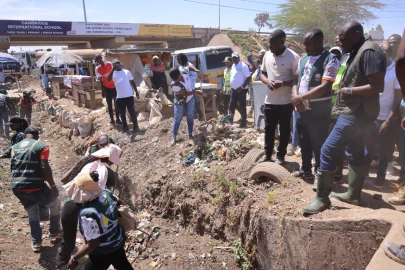
The confrontation lasted nearly three hours. Amateur video footage captured the raw, chaotic scenes outside the police station — residents demanding the release of the arrested miners, officers calling in reinforcements. Transmara police commander Enrico Telewa confirmed that civilians stormed the station and that one person lost their life in the chaos. What he did not explain — what nobody in authority has yet explained — is why a government directive of this magnitude was enforced through arrests rather than through dialogue. Moses Tikiran, a gold miner at the site, put it plainly: if the government has a problem with Kilima Pesa, they should come and talk to the Moyoi group. That is not an unreasonable demand. That is basic governance.
The pattern of grievance here runs deeper than a single Friday afternoon. Residents acknowledge that the mines carry real dangers — frequent tragedy is their own description — yet they have built their lives around Kilima Pesa because nothing else has been offered to them. When the state arrives not with solutions but with arrest warrants, it signals something important about whose interests are actually being protected. Kennedy Kisile, a Transmara resident, was direct in his response: there is no justification for killing civilians with bullets, and he wants the Independent Policing Oversight Authority to investigate. That demand deserves to be taken seriously, not managed.
As calm slowly returns to Lolgorian, the political and moral weight of Friday’s events should not be allowed to dissolve into bureaucratic silence. A teenager was shot. A person is dead. Mining equipment was reportedly destroyed during the operation. These are not abstract policy outcomes — they are consequences that will shape how an entire community relates to the Kenyan state for years to come. If the government had a legitimate reason to halt operations at Kilima Pesa, it now owes that community a transparent, public account of what that reason is. Anything less confirms exactly what young, watching Kenyans already suspect: that directives flow downward, but accountability never does.