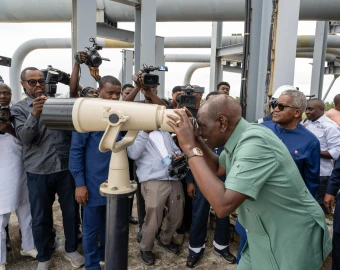
Kenyan lawmakers are demanding answers over the breakneck speed at which a Ksh. 2 trillion Dangote oil refinery in Lamu County moved from rumour to groundbreaking — with MPs warning that corners may have been cut and that ordinary Kenyans were deliberately kept in the dark about a project that will reshape the country’s economic landscape for generations.
Tetu Member of Parliament Geoffrey Wandeto put it bluntly on Citizen TV: “This refinery is a big story this week because to almost all of us Kenyans it is technically an ambush of information.” His words landed hard. Two months ago, the project was supposedly headed to Tanzania. Tanzanian officials publicly distanced themselves from it. Then President Ruto met with billionaire Aliko Dangote, and within two to three months, Kenya had a groundbreaking ceremony for what Wandeto called “perhaps the single largest single project” in the country’s history. That timeline is not normal.
Wandeto’s core question is one every Kenyan should be asking: did this project go through parliament? Did it follow due process? Who actually owns it?
A Deal That Sounds Too Good
Makueni Senator Dan Maanzo sharpened the concern further, invoking a principle that every street-smart Kenyan understands instinctively. “When a deal sounds too good, think twice,” he said. “This deal is looking too good to be real for the country.” Maanzo went further, suggesting the refinery is woven into William Ruto’s broader political campaign machinery — a mega-project timed and packaged for maximum electoral optics rather than genuine national development.
The refinery, set to be built in Kililana, Lamu County, promises a production capacity of 700,000 barrels per day and 60,000 local jobs. Those numbers are staggering. They are also, to a skeptical eye, suspiciously round.
Meanwhile, the people whose land sits at the centre of all this grand ambition are already in court. Lamu residents have filed a legal challenge, describing what they call the unlawful takeover and destruction of their ancestral land. Their voices were not part of the announcement. They were not invited to the groundbreaking. They found out the same way the rest of Kenya did — after the fact. That is the real story here, and it is one that demands accountability before a single barrel of oil is ever refined.