The Numbers Don’t Lie — And Neither Does Your Empty Stomach
Here is the uncomfortable truth: across Africa, governments are failing to feed their people, and the statistics coming out of South Africa right now are a warning siren that should jolt every young Kenyan into paying attention. South Africa’s household food basket just hit R5,530.52 in July 2026 — up again, month after month, year after year — while wages stay frozen and social grants barely move. This is not a temporary blip. This is a structural collapse dressed up in bureaucratic language, and it is happening in broad daylight.
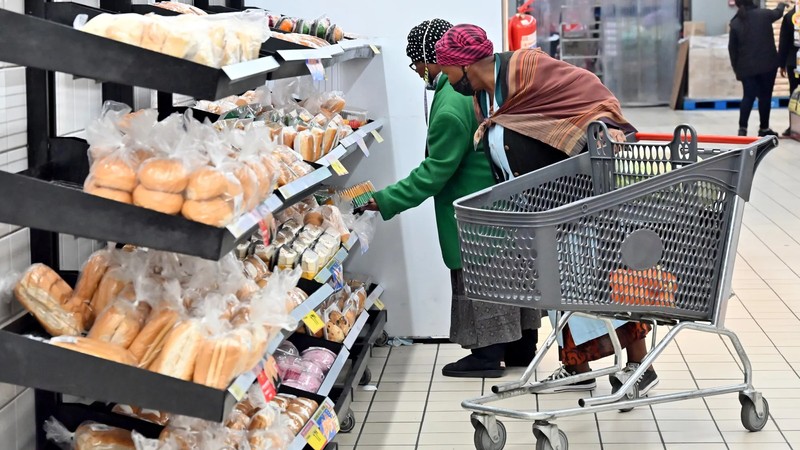
The Pietermaritzburg Economic Justice and Dignity Group released its latest Household Affordability Index this week, and the data is damning. The average cost of feeding a household rose by R28.11 in a single month and by R87.81 compared to July last year. Meanwhile, South Africa’s headline inflation sits at a seemingly manageable 5.0%. That number is a lie by omission — because the food prices that actually matter to poor families are climbing far faster than any official figure suggests. Maize meal. Cooking oil. Eggs. Frozen chicken. The staples that keep bodies alive are all getting more expensive. Apples jumped by over 5% in a single month. These are not luxury items. These are survival items.
The Institute for Economic Justice’s Siyanda Baduza put it plainly: the average food basket has risen by over R150 since last year, while the Child Support Grant — the largest grant available to poor families — has gone up by exactly R20 in the same period. Twenty rands. That is not a policy response. That is an insult wrapped in a budget line.
One Wage, Four Mouths, Zero Margin for Error
What makes this crisis genuinely devastating — and what connects it directly to the Kenyan experience — is the mathematics of dependency. PMBEJD director Mervyn Abrahams explains it with brutal clarity: for Black South African workers, one wage typically supports four people. The maximum wage of R5,562.32 divided among a family of four leaves each person with R1,390.58 per month. That figure falls below South Africa’s National Lower-Bound Poverty Line of R1,415 per capita per month. Let that sink in. A person earning the maximum wage in their household still cannot lift their family above the lowest official poverty threshold. The system is not broken — it was never designed to work for these people in the first place.
Young Kenyans know this mathematics intimately. You know what it means when one salary must cover school fees, rent, unga, cooking gas, and transport for an entire household. You know the specific anxiety of the mid-month phone call from home. South Africa’s data simply puts numbers to a reality that millions of young Africans navigate every single day without a safety net, without political acknowledgment, and without a credible plan from the people in power. The geography differs. The betrayal is identical.
Price increases are not falling equally across South Africa’s regions either. Cape Town’s basket rose by R69.26 in July. Springbok’s rose by R164.70. Mtubatuba’s by R129.49. These are not averages softened by wealthy suburbs — these are the costs landing on the plates of the poorest communities in some of the country’s most neglected areas. Distance from economic centres does not protect you from food inflation. It amplifies it.
The Producer Price Paradox That Exposes the Real Problem
Here is where the official narrative completely falls apart, and where young, skeptical readers should lean in hard. Statistics South Africa’s Producer Price Index for May 2026 shows that agriculture recorded a deflation of 7.4%, with crops and horticulture collapsing by a staggering 15.4%. Farmers are receiving less for their produce. Prices at the farm gate are falling. And yet food in the shops keeps getting more expensive. That gap — between what farmers earn and what consumers pay — is not a mystery. It is the fingerprint of a broken supply chain, unchecked middlemen, concentrated retail power, and a government that has chosen to protect markets over people.
Civil society organisations are demanding that government increase social grants in line with the actual cost of living, and that it confront the structural drivers of food insecurity: chronic unemployment, suppressed wages, and a food system that extracts value from poor communities rather than nourishing them. These are not radical demands. They are the bare minimum. And the fact that they remain unmet, year after year, while the basket price climbs and the grant stays flat, tells you everything you need to know about whose interests the system is actually protecting.
The implication is this: food insecurity is not a natural disaster. It is a political choice, made repeatedly, by governments that have the data, have the civil society voices, and still choose inaction. South Africa’s numbers are a mirror. Every young African who has ever counted coins before a grocery run, every Kenyan who has watched unga prices spike before an election and then watched politicians shrug — you already know this story. The question is whether we are going to keep accepting it as inevitable.