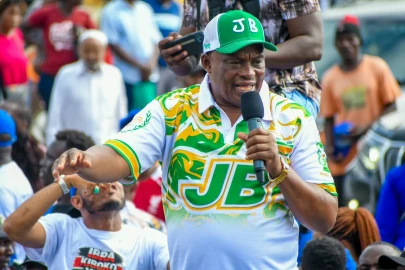
Picture this: you inherit a piece of land from your grandparents — land that has fed your family for generations, land that sits on a goldmine — and someone quietly sells it for a fraction of its worth while you’re busy trying to survive. That is exactly the kind of betrayal Justin Muturi is describing when he stands before the residents of Changamwe in Mombasa County and fires a warning shot heard across boardrooms from Nairobi to London to Dubai.
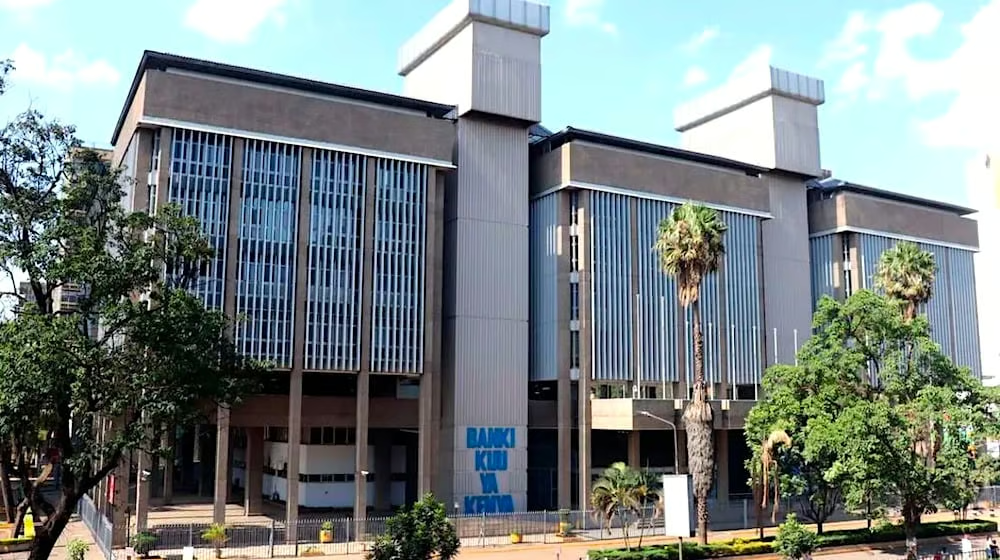
Speaking on behalf of the Ukombozi Alliance, Muturi trained his sights on what he called a deeply questionable deal involving the Kenya Ports Authority — a transaction reportedly valued at a staggering KSh10 billion, a figure whose basis, he insists, nobody has adequately explained to the Kenyan public. The assets in question are not abstract government paperwork. They are the lifeblood of Kenya’s economic architecture: the LAPSSET corridor, the Inland Container Depot in Embakasi, Kilindini Terminal 2, Kisumu Port, and the regional railway and logistics infrastructure that holds together East Africa’s trade arteries. These are the kinds of assets that, once gone, do not come back.
What Is Actually at Stake
You have to understand the weight of what Muturi is talking about before you dismiss this as routine political posturing. Kenya’s ports and logistics infrastructure are not simply commercial real estate — they are the scaffolding upon which the country’s economic sovereignty rests. Every container that passes through Mombasa, every tonne of cargo that moves along the LAPSSET corridor, every shipment that flows through Kisumu Port represents national wealth that belongs to every Kenyan, not to a political class with the right connections and the right moment to strike. Muturi’s framing is blunt and deliberate: “These are strategic national assets built with public resources, not political property to be disposed of without transparency or accountability.”
The reported KSh10 billion valuation is the number that should make you pause. Whether it is accurate, inflated or — as the Alliance strongly implies — a gross undervaluation engineered to benefit a select few, is precisely the question that demands an answer. The details of the transaction have not been made publicly available, and that opacity is itself the problem. When public assets change hands in the dark, ordinary Kenyans are always the ones left holding the loss.
A Direct Warning to Global Investors
What makes this moment genuinely significant is that Muturi did not stop at criticising the government. He extended his warning beyond Kenya’s borders, addressing investors, financial institutions and commercial interests in every major world capital with a directness that is rare in Kenyan political discourse. His message was unambiguous: “Any transaction found to have been fraudulent, unlawful, or deliberately structured to undermine Kenya’s public interest will face the full scrutiny of the law.” This is not the language of a politician hedging his bets — this is a declaration of intent.
The Ukombozi Alliance made it explicit that a future government under their leadership would actively pursue legal avenues to review disputed transactions and, where the law justifies it, seek their reversal. Muturi went further, dismantling the comfortable assumption that political connections provide a permanent shield. Investors who believe that a change of government wipes the slate clean are being told, in no uncertain terms, that independent investigations, legal challenges and demands for restitution remain live possibilities regardless of who holds power at any given moment.
Not Anti-Investment — Anti-Impunity
The Alliance was careful to draw a distinction that matters enormously in a country that desperately needs foreign direct investment. Their position, they stressed, is not a rejection of investment itself — Kenya needs capital, expertise and global partnerships to grow. What they are opposing is the corrupt architecture that allows public wealth to be privatised through opaque deals that bypass accountability and leave taxpayers exposed. There is a profound difference between welcoming investors who operate within the law and protecting the interests of those who exploit institutional weakness to extract value from a country that cannot afford to lose it.
Muturi’s closing line captures the entire argument in a single breath: “Kenya is not for sale, public wealth is not a private bounty, and no deal is above the law.” For young Kenyans who have watched one generation of leaders after another treat national resources as personal inheritance, those words carry the weight of a long and justified anger. The question is whether the warning will be heeded — by the investors being put on notice, by the institutions that should be demanding answers, and by a government that owes its citizens far more transparency than it has offered so far.
Because at the end of it all, the ports of Mombasa, the railway lines cutting through the interior, the depots and terminals and corridors that move Kenya’s economy forward — those belong to the child in Changamwe just as much as they belong to anyone in a boardroom. And that child deserves to know exactly what is being done with what is theirs.